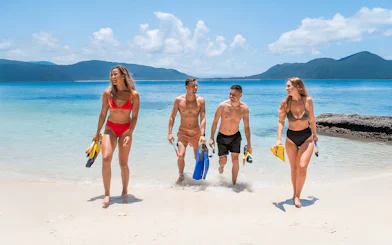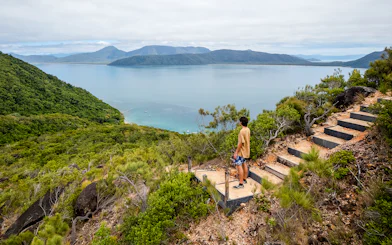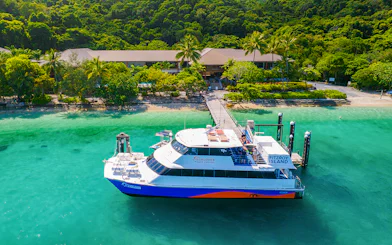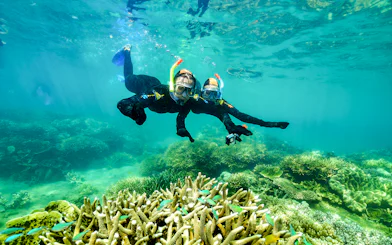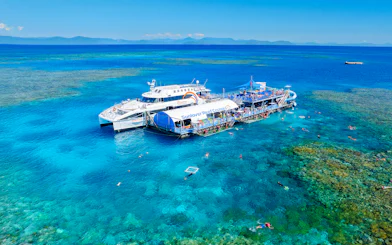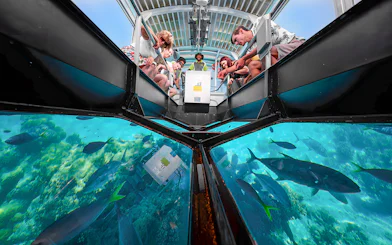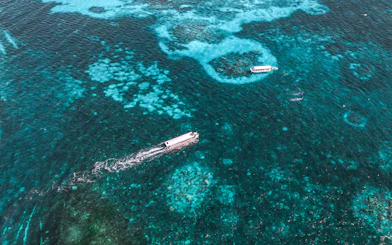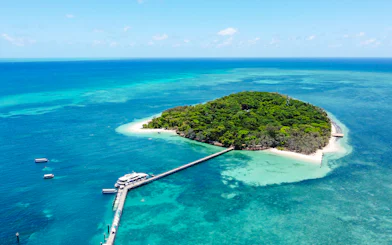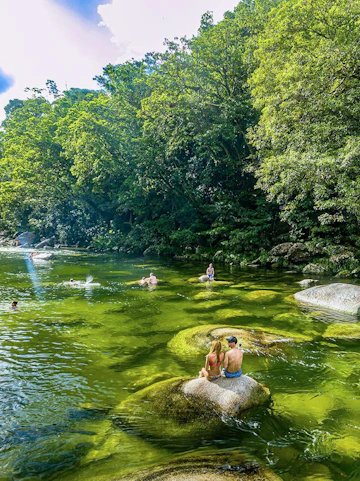


Take an island before you take an outer reef day. Coral within swimming distance of a beach you can stand on, and you'll know by lunchtime whether you want to go further out.
Great Barrier Reef tours
The reef is 2,300km long and there are hundreds of trips onto it. That's why this is hard. But the trips only differ in four ways, and once you know what those are, the list gets short fast.
🌊 Pontoon, outer reef, inner reef, liveaboard?
Not sure what those words mean yet?
Top things to do in Cairns
How Headout makes choosing experiences effortless
We curate the best ways to experience
We research and organise all unique experiences - from tickets to tours to special combos - so you get all the choices without the clutter.
We partner with the best
Every supplier is vetted for quality, reliability, and value so you only get top rated experiences. No surprises, no disappointments.
All the best options, in one place
Each experience is thoughtfully organised to give you maximum availability, great value and an easy way to choose.
Book with complete peace of mind
Free cancellations, Flexible payments, and 24/7 support - thoughtfully designed for flexibility, assurance, and total peace of mind.
Slide 1 of 41/4
Slide 1 of 4

The reef isn't one place
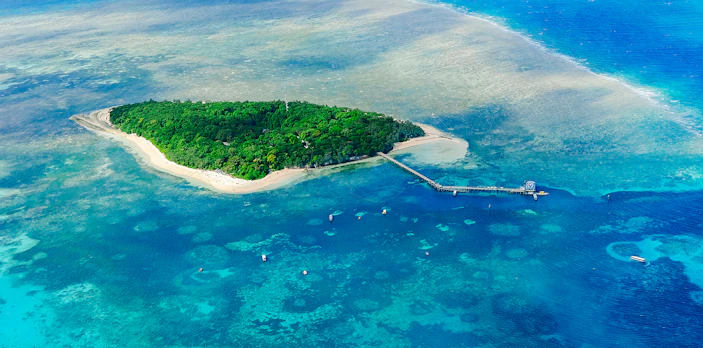
The Great Barrier Reef is 2,300km long. Roughly the drive from Sydney to Cairns, made up of something like 2,900 separate reefs and 900 islands.
So nobody really goes to the Great Barrier Reef, in the same way nobody goes to Europe. What's on this page is one slice of it, the water off Cairns and Port Douglas. And even inside that slice, the reef starts a few kilometres offshore and keeps going for about 70km out. The gap between the near end and the far end is most of what separates the trips above.
What it's actually like out there
Nobody warns you that the first 10 minutes are basically a trust exercise.
You’re on a rocking boat, wrestling with your mask, and climbing into water that’s colder than expected. For 30 seconds, you’re thinking, Was this a mistake?
Then you put your face in the water, and everything changes.
🐠 The sounds: Fish crunching coral, tiny clicks coming from somewhere below, and a whole underwater world doing its thing.
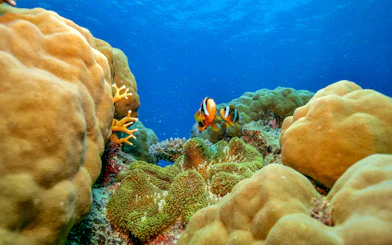
🌊 The scale: What looked like a tiny bump from the boat turns out to be a massive coral formation packed with hundreds of fish.
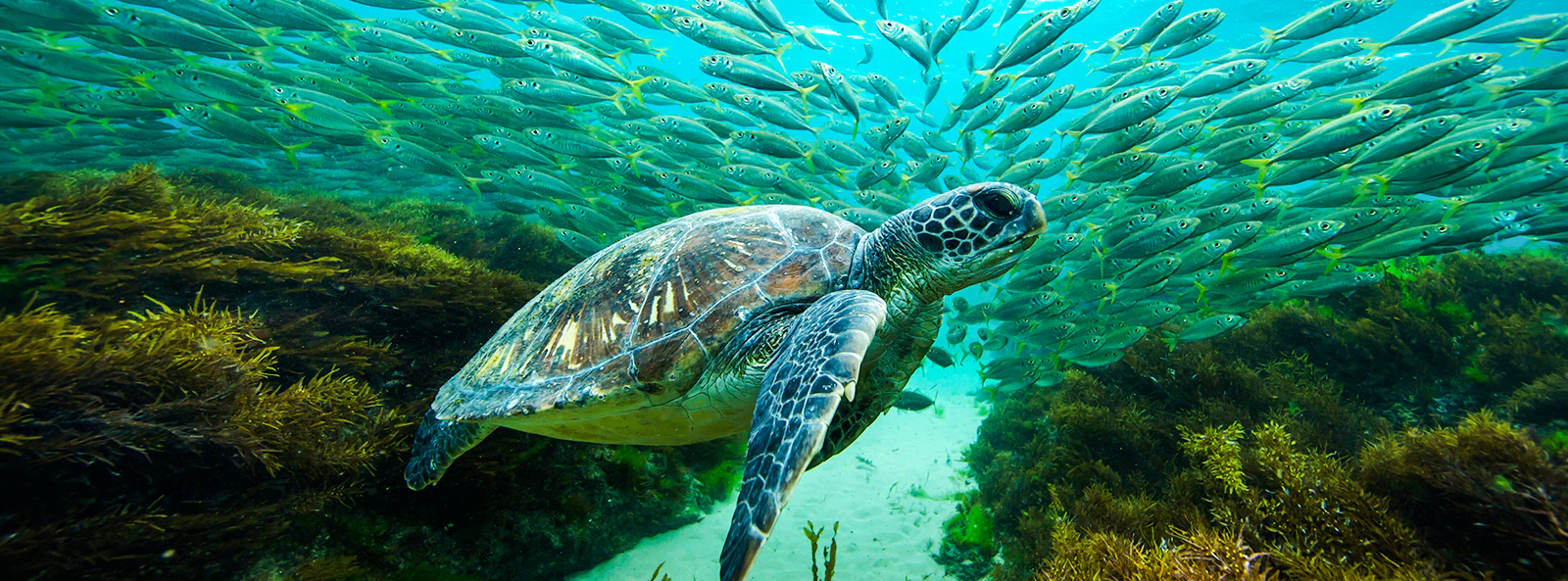
🐢 The main character: A turtle gliding past, completely unbothered. Everyone stops swimming. Nobody says a word.
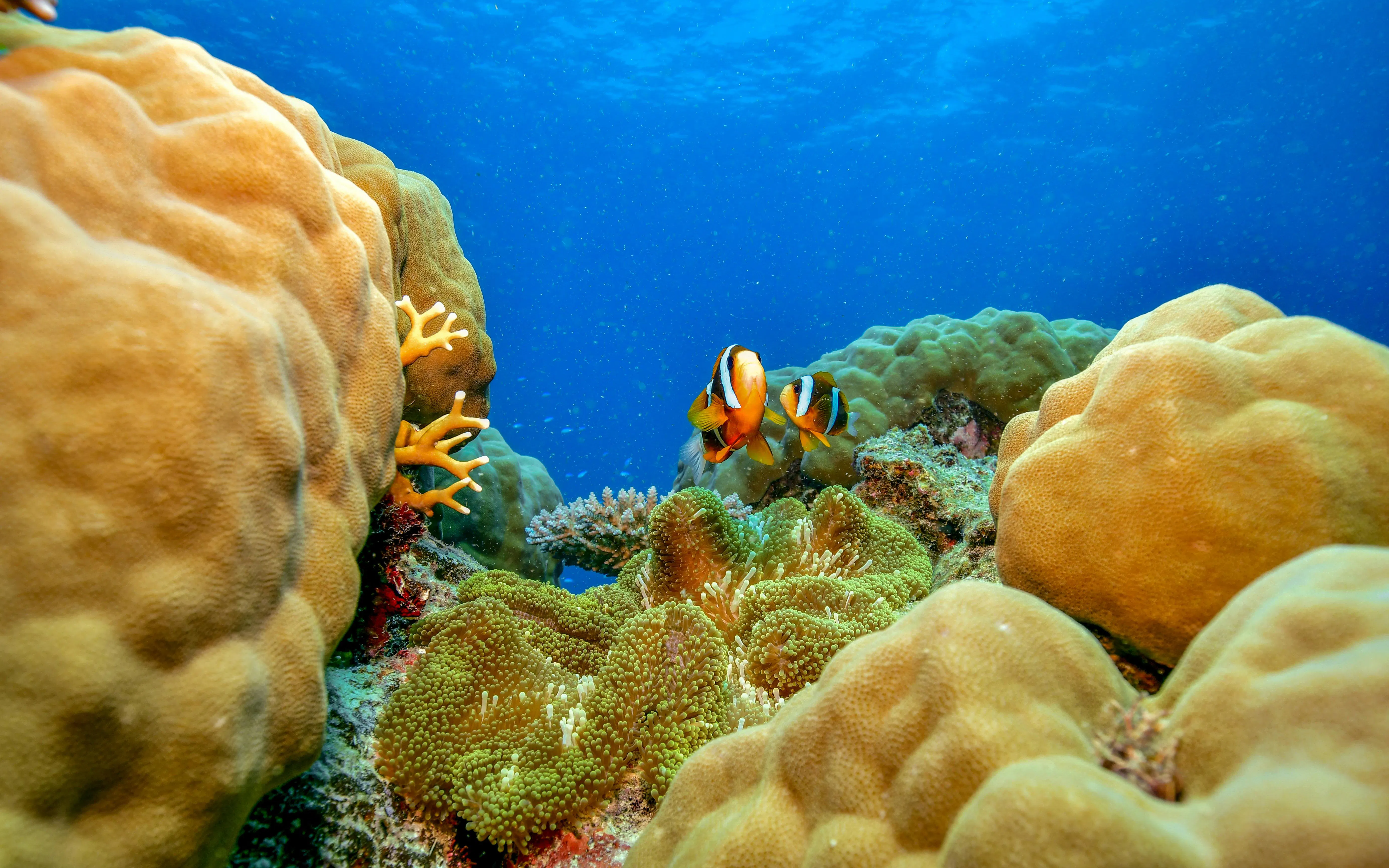
Then there are the extras: electric-blue clams, tiny clownfish with massive attitudes, and maybe a reef shark cruising underneath you.
Where do you start?
Someone in my group won't swim
Glass bottom boat and semi-submarine trips let them see coral without getting in. Flotation vests and pool noodles are free on every boat if they change their mind.
I'm travelling with kids
Shorter crossing, a beach for the bored half hour, shade, and food you didn't carry. Check minimum ages before booking anything with a dive component.
I get seasick
Stay inside the 45-minute crossing and take the earliest departure, because wind builds through the day. Medicate before boarding, not at the first symptom.
I've only got half a day
Half-days exist on the inner reef only, because you can't reach the outer reef and back in four hours. You could also opt for scenic flights.
I've only got one day
Spend it offshore. It's the highest ratio of reef to travel time you can get in a day, and it covers snorkelling, dry viewing and an optional dive on one ticket.
I want the best reef, crowds aside
The outer reef sits near the edge of the continental shelf, where visibility is consistently better. It costs you four hours of crossing to get there.
I want a quieter boat
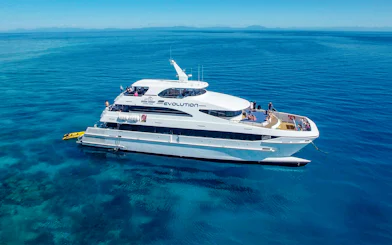
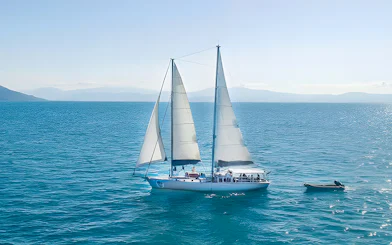
Sailing catamarans and small-group operators cap their numbers. You give up the waterslide and the buffet and get a boat where you're not queuing for gear.
This is the one that shapes everything else. It decides how long your day runs, how the water looks, and how much of the day you spend sitting on a boat.
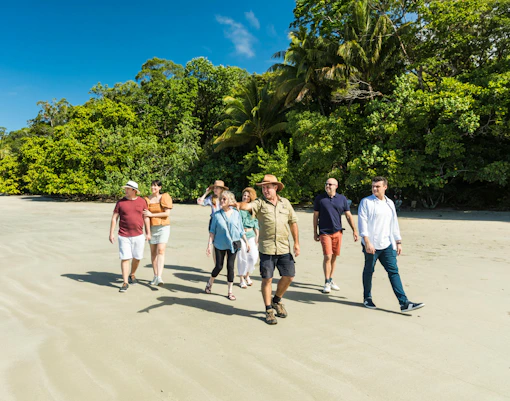
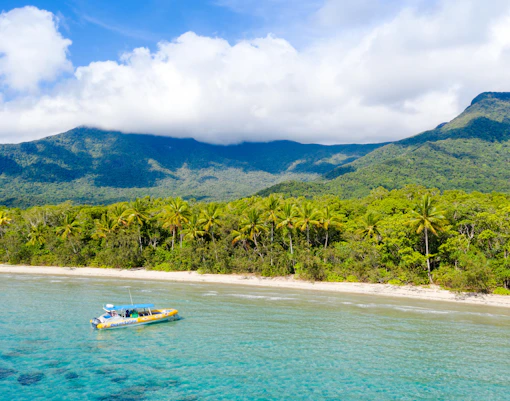
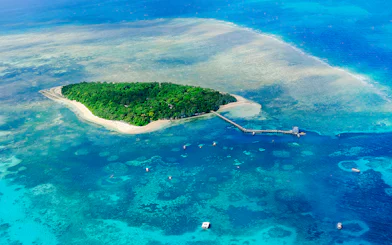
- Close in, about 45 minutes: Green Island, Fitzroy Island, Low Isles. The water's shallower and a little hazier, and the coral starts where the sand stops, so you can wade out to it. You also get a beach, a patch of shade, a café and a toilet that isn't moving.
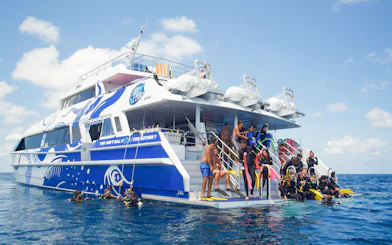
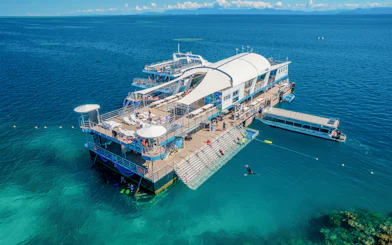
- Further out, 90 minutes to two hours: Near the edge of the continental shelf. Clearer water, bigger coral, more fish, and the odd feeling of being properly at sea with no land in any direction. No beach. And four of your hours go to the crossing.
- Where people go wrong: Assuming further out is better. It's a better reef. Whether it's a better day depends on the next three questions.
What a Great Barrier Reef trip costs
| Trip type | Typical price | What you're paying for |
|---|---|---|
Inner reef half day | AU$108–135 | Crossing, island access, snorkel gear |
Inner reef full day | AU$110–200 | The above plus lunch and activity upgrades |
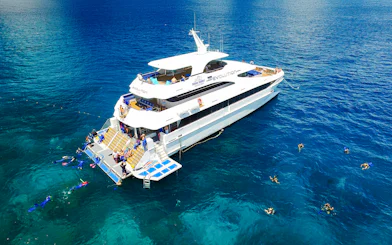
Outer reef day boat | AU$217–290 | Two to three sites, lunch, guided snorkel |
Outer reef pontoon | AU$255–340 | One site all day, observatory, semi-sub, buffet |
Scenic flight | AU$239 | Forty minutes, no water |
Reef plus helicopter | from AU$440 | A full day plus a one-way scenic leg |
Other charges
- The Environmental Management Charge: A government levy on every reef trip, charged per person per day, usually separate from your fare.
- Intro dive: Roughly AU$150–200.
- Certified dive: Roughly AU$100–160 for two dives with your own gear.
- Stinger suit hire: Usually free, occasionally AU$10–15. Wear it either way.
- Underwater camera hire: Skip it and bring a phone case.
Things you've probably read, and what's actually true
Most people arrive here having already read a forum thread that contradicted itself. These are the four that stall people.
Green Island isn't the real reef
You'll see this on forums, and it's half right, which is exactly why it's confusing.
True: Green Island is inner reef. The water is shallower, visibility is lower than the outer reef, and it's one of the most-visited sites on the coast. If your priority is the clearest water and the biggest coral, this isn't it.
Also true: Green Island is a coral cay. It was built by the reef and it sits on its own fringing reef. You are on the Great Barrier Reef, and there are turtles and reef fish 20m from the sand.
What it means for you: if you have one day, you're a confident swimmer and reef quality is the whole point, go offshore. If you have kids, a mixed group, a half day, or anyone unsure about deep water, Green Island is the better day. It isn't a consolation prize.
You have to dive to see anything
Most coral on the reef sits in shallow water, and snorkellers float directly above it. Divers go deeper and see more structure. Snorkellers see more colour, because colour drops off with depth. Neither one is the real version, and the people who come back happiest are usually the ones who picked the thing they were comfortable doing.
The expensive tours are better
Money reliably buys smaller passenger numbers, a more comfortable crossing and access to sites further out. It does not reliably buy better coral, because nobody controls the weather. A cheap trip on a calm day beats a premium trip on a windy one, every time.
Just book it when you get there
You can, and people do. The problem is that boats fill in exactly the order you'd least want them to: dive spots first, then pontoon capacity, then seats. Booking ahead also means you read the cancellation policy before you pay rather than after, which matters more than people expect on a coast where trips get called off for wind.
What actually ruins a reef day
Seasickness
Two hours in open water, and conditions build through the morning. Take something one to two hours before you board, not when you start feeling it. If someone in your group is prone to it, book an island or take the first boat out.
A mask that leaks
Rental masks are fine right up until they aren't, and one that floods every thirty seconds will wreck four hours faster than cloud will. Bring your own if you have one that fits. If not, spend two minutes at the gear station getting the fit right instead of taking the first one handed to you.
Booking two reef days back to back
People do this to make the most of the trip and regret it. Sore neck from looking down, aching shoulders, more sun than they bargained for, and day two turns into an obligation. One reef day and one rainforest or town day beats two reef days.
Where you put the reef in your week
Trips get cancelled for wind and swell rather than rain, and more often than visitors expect. The fix isn't a better forecast, it's scheduling. Put the reef on your first full day in the region, not your last. Then a cancellation is an annoyance instead of the thing you flew here for.
Booking the day you wish you wanted
The most common one and the hardest to catch, because it happens before you arrive. People pick the adventurous option to live up to the trip, then spend the day wishing they were somewhere with shade.
How many days do you need?
Most people plan one reef day. It's usually one too few.
- Weather: With one day, a cancellation ends it. With two, you've got a spare and the whole thing stops being a gamble.
- They're different days: An island day and an outer reef day aren't the same experience twice. If you'd rather compress it, one trip pairs Fitzroy Island with the Moore Reef pontoon, and another does Green Island plus an outer reef site.
- The working answer: Two to three nights in the region. One reef day, one rainforest or town day, one spare. If you're diving, add a day, and don't put the diving last, because you can't fly within 24 hours of a dive.
Cairns or Port Douglas?
Both put you on the reef. They put you on different parts of it.
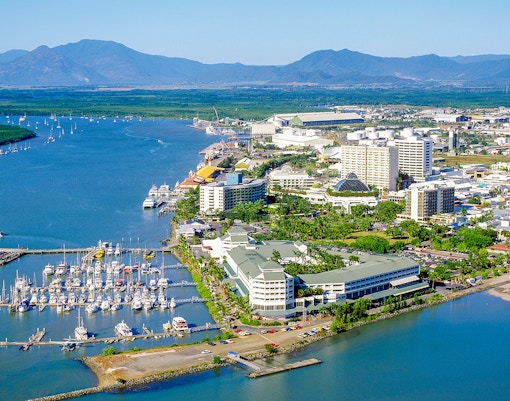
- Cairns has the Reef Fleet Terminal, the most departures, the widest price range and the airport. Green Island, Fitzroy Island, Moore Reef and the Hastings and Norman reef systems all leave from here. If you want choice, or you're watching the budget, or you only get one shot at it, base yourself here.
- Port Douglas is an hour north, a smaller marina with fewer boats. It's the departure point for the Low Isles and the Agincourt ribbon reefs, which sit right on the edge of the shelf and hold their visibility well. Fewer passengers, higher average price, and you're already at the edge of the Daintree.
- The practical bit: don't stay in one and book from the other without allowing for the drive. The highway is single-lane and slow behind tour coaches. An 8am departure from Port Douglas means leaving Cairns at 6:30am.
What people who go out regularly do differently
- Book the earliest departure available. Wind builds through the day and afternoon crossings are consistently rougher.
- Bring your own mask if you have one that fits. A leaking mask ruins a reef day faster than cloud does.
- Wear the lycra suit even outside stinger season. Four hours face-down burns the backs of your legs faster than anything else.
- Get in the water first and eat later. The reef is quiet while everyone else is at the buffet.
- Ask the crew where they're actually going that day. Sites change with the wind, and the reef on your booking isn't always the one you'll swim.
- Take the semi-submersible even if you're a strong swimmer. It goes over structure you can't reach from the surface.
- Driving Cairns to Port Douglas for an 8am departure? Leave at 6:30am. The highway is single-lane and slow behind coaches.
- Don't book diving on your last day. The flying rule catches more people than anything else here.
A day on the reef, hour by hour
A full-day outer reef trip, start to finish, so you can see where the hours actually go.
6:45am
Coffee on the Esplanade
Terminal cafés open by 6:30am. Eat something plain. A big breakfast and a two-hour crossing don't mix.
7:30am
Check in at Reef Fleet Terminal
Bring photo ID and your booking reference. Check-in closes before departure and boats leave on time regardless.
8am
Departure
Take an outside seat if you're prone to seasickness. Safety brief in the first 15 minutes, then most people sleep.
10am
First reef site
Gear fitting takes 10 minutes. Get in early, before the queue at the platform stairs builds.
11am
Guided snorkel or first dive
If a marine biologist is running a guided tour, take it. You'll see about three times as much as you would alone.
12:30pm
Lunch on board
Eat quickly and get back in while the water's quiet.
1:30pm
Semi-submersible
Twenty minutes of dry reef viewing and a break from the sun. Also the best thing on the boat for kids who've had enough.
2:30pm
Second site or last swim
Day boats move to a second reef. Pontoon trips give you a final session at the same site.
3:30pm
Head back
Rinse gear, change into dry clothes, and take another tablet if the crossing out was rough.
5:30pm
Back in Cairns
The Esplanade lagoon and the Night Markets are both a short walk from the terminal.
Frequently asked questions
It depends on four things: how far out you want to go, whether you want an island, a pontoon or a boat, how much you want to be in the water, and whether you have a half day or a full one. Answer those and three or four trips are left.
Yes. Dive spots and pontoon capacity sell out before boat seats do, and booking ahead means you read the cancellation policy before you pay rather than after.
Yes, and plenty of people book exactly that trip. Glass bottom boats, semi-submersibles and underwater observatories all show you coral without getting in. Flotation vests and pool noodles are free on every reef boat if you change your mind.
Yes. It's a coral cay sitting on its own fringing reef. It's inner reef, so visibility is lower than offshore, but there is coral and there are turtles a short swim from the beach.
Three to five hours on a full-day outer reef trip, and two to three on an island half day. The rest of the time is crossing.
Two to three nights in the region. One reef day, one other day, and one spare in case of weather.
Operators cancel for wind and swell rather than rain, and usually offer a refund or a date transfer. Policies vary, so check yours at checkout.